

Table of Contents
Imagine a world where every task, no matter how simple or complex, had to be performed manually. Such a world, though not far removed from our distant past, stands in stark contrast to the highly automated reality we inhabit today. Machine automation, the art and science of making machines operate automatically, has fundamentally reshaped industries, economies, and daily life. It is a journey that spans centuries, characterized by relentless innovation, paradigm shifts, and an ever-deepening understanding of how to make machines work smarter, faster, and more independently.
This blog explores the journey of machine automation, the challenges faced by traditional systems, the transformative power of artificial intelligence (AI) and machine learning (ML), and how organizations can prepare for the future of automation.

Early Seeds of Automation in the Pre-Industrial Era
The concept of automation isn’t a modern invention. Long before industrialization, early civilizations demonstrated an innate desire to reduce human effort. Simple tools like levers and pulleys were perhaps the first steps, amplifying human strength. Ancient Greeks developed automations for entertainment and religious ceremonies, such as Heron of Alexandria’s various steam-powered devices and automatic temple doors. Watermills and windmills, prevalent in the Roman Empire and medieval times, were perhaps the first true industrial automations, converting natural energy into mechanical power for grinding grain or pumping water, showcasing a basic form of process automation. These early innovations laid the conceptual groundwork for more complex systems.
Did You Know?
Automation isn’t new—its roots go back to ancient Greece, where inventors like Hero of Alexandria created steam-powered automata for entertainment and religious ceremonies.
The Industrial Revolution and Automation – Mechanization
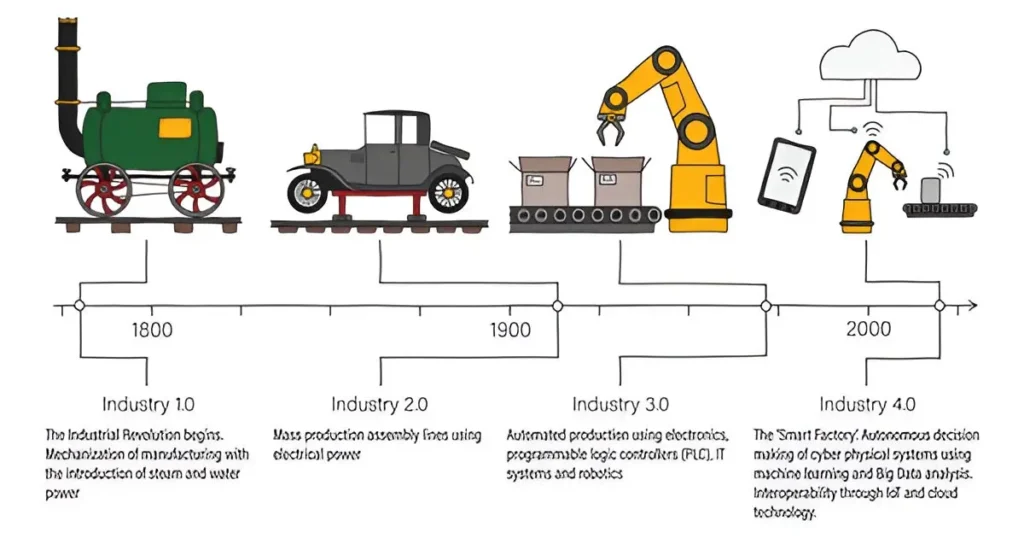
The true acceleration of machine automation began with the Industrial Revolution in the 18th century. This era saw the widespread adoption of power-driven machinery, fundamentally transforming manufacturing. Key inventions like James Watt’s improved steam engine provided a consistent power source, replacing unreliable natural forces. Innovations in textile machinery, such as the power loom, began to automate the weaving process.
Crucially, the concept of interchangeable parts, pioneered by figures like Eli Whitney, allowed for mass production and easier repair, a critical step towards automated assembly. Factories emerged, orchestrating hundreds of machines and workers in a systematic, albeit still human-controlled, production flow. This period was about mechanization – machines performing tasks – but the control of these machines was largely manual.
Food for Thought!
Interested in how modern manufacturing leverages automation? Learn how CNC design optimizes machining efficiency in our detailed guide.
The Rise of Automatic Control: Software Defined Systems
The mid-20th century marked a pivotal shift from mere mechanization to true automation, where machines could control their own operations. The advent of feedback control systems was revolutionary. One of the earliest examples was James Watt’s centrifugal governor for the steam engine, which regulated speed automatically.
However, the real leap came with electronics and computing. Programmable Logic Controllers (PLCs), invented in the late 1960s, replaced complex relay-based control systems in factories. PLCs allowed engineers to program sequences of operations for machinery, offering flexibility, reliability, and ease of modification that mechanical relays couldn’t match. Simultaneously, Numerical Control (NC) machines emerged, initially using punched tapes to dictate the movements of machine tools, leading to unprecedented precision and repeatability in manufacturing. These technologies laid the foundation for highly automated production lines.
The Age of Robotics: Bringing Machines to Life
The 1960s also saw the birth of industrial robotics. The first industrial robot, Unimate, installed at a General Motors plant in 1961, marked the beginning of machines performing dangerous, repetitive, or strenuous tasks previously done by humans. Early robots were often “blind,” relying on precise programming for specific movements.
Did You Know?
The first industrial robot, Unimate, was installed at a General Motors plant in 1961. Today, there are over 2.7 million industrial robots in use worldwide, mostly in the automotive industry.
As technology advanced, so did the capabilities of robots. The integration of vision systems allowed robots to “see” and adapt to variations, while advancements in motor control and sensor technology enabled greater dexterity and precision. By the late 20th century, industrial robots had become ubiquitous in automotive manufacturing, electronics assembly, and various other sectors, drastically improving efficiency and safety on production floors.

Challenges of Software-Defined Systems
In the early days of automation, most systems were built around pre-programmed logic, designed to execute repetitive tasks with precision. These software defined systems excelled at assembly line operations, sorting, and other routine functions. However, as industries grew more complex and dynamic, several limitations became apparent:
- Lack of Flexibility: Traditional systems struggled to adapt to changing environments or unexpected variables, requiring extensive reprogramming for even minor adjustments.
- High Maintenance Overhead: Updating code or hardware for new tasks was time consuming and resource intensive.
- Limited Scalability: As tasks grew more nuanced and data intensive, these systems often failed to keep pace.
- Reduced Effectiveness: Advanced applications, such as machine vision, were constrained by the static nature of software defined logic.
These challenges highlighted the need for more adaptable, intelligent automation solutions.
Read More!
Want to avoid pitfalls in machine design? Discover five common mistakes and how to steer clear of them in our expert article.

The Shift to AI-Driven Intelligence
The integration of AI and ML into machine automation marks a pivotal shift in the industry. Unlike their predecessors, AI-driven systems can learn from data, adapt to new scenarios, and make decisions in real time. This evolution brings several key benefits:
1. Smarter Decision-Making
AI systems are capable of processing vast amounts of data instantaneously, enabling machines to make informed decisions with minimal human intervention. This leads to faster response times, improved accuracy, and enhanced operational efficiency.
2. Seamless Adaptability
One of the most significant advantages of AI-driven automation is its ability to adapt without constant reprogramming. Whether a factory introduces a new product line or encounters unpredictable inputs, AI systems evolve alongside operational needs, reducing downtime and maintenance costs.
3. Continuous Improvement
Machine learning allows automation systems to improve over time by analysing data from ongoing operations. For example, a machine vision system can enhance its defect detection accuracy as it processes more images, leading to higher quality outputs and reduced waste.
4. Enhanced Connectivity
The convergence of AI, edge computing, and the Internet of Things (IoT) enables automation systems to access and process real-time data from diverse sources. This connectivity supports proactive decision-making, predictive maintenance, and optimized resource allocation.
Overcoming Implementation Challenges
While the benefits of AI-driven automation are substantial, organizations must navigate several challenges during implementation.
1. High Computational Demands
AI applications, especially those involving machine vision, require significant processing power to analyze large datasets in real time. Tasks such as optical character recognition, image recognition, and anomaly detection depend on complex neural networks that demand specialized hardware like GPUs and TPUs. Edge computing offers a solution by processing data locally, reducing latency and bandwidth requirements, but also introduces challenges related to energy consumption and heat dissipation.
2. Cost Considerations
Transitioning from legacy systems to AI-enabled automation involves considerable upfront investment. However, these costs are often offset by long-term gains in productivity, efficiency, and reduced waste. Strategic planning and phased implementation can help organizations manage expenses and realize returns on investment sooner.
3. Ethical and Workforce Implications
Automation inevitably raises concerns about workforce displacement and the need for retraining. While AI can address labor shortages and enhance productivity, it is essential to invest in upskilling initiatives and foster a collaborative environment where human and machine capabilities complement each other. This approach ensures a smooth transition and maximizes organizational morale and efficiency.
Preparing for the Future of Machine Automation
The transition to AI-driven machine automation is more accessible than ever, thanks to advancements in hardware, software, and connectivity. Organizations that embrace this evolution position themselves to unlock unprecedented levels of productivity, precision, and innovation. Here are some strategies to prepare for the future:
- Evaluate Current Systems: Assess existing automation infrastructure to identify opportunities for AI integration and improvement.
- Invest in Training: Equip teams with the skills needed to manage and collaborate with intelligent automation systems.
- Adopt a Phased Approach: Implement AI-driven solutions incrementally to minimize disruption and maximize ROI.
- Leverage Expert Support: Partner with experienced providers to design and deploy specialized computing platforms tailored to unique operational needs.
The Impact and Future Horizon
The evolution of machine automation has brought undeniable benefits: increased productivity, improved quality, enhanced safety for workers (by taking on hazardous tasks), reduced costs, and the ability to produce goods at scales unimaginable just a century ago. It has driven economic growth and global competitiveness.
Did You Know?
Automation could boost global productivity by 1.5% annually, and about 60% of all occupations could automate at least 30% of their tasks.
However, this evolution also presents challenges, notably concerns about job displacement, the need for a skilled workforce capable of managing advanced systems, and ethical considerations surrounding autonomous decision-making.
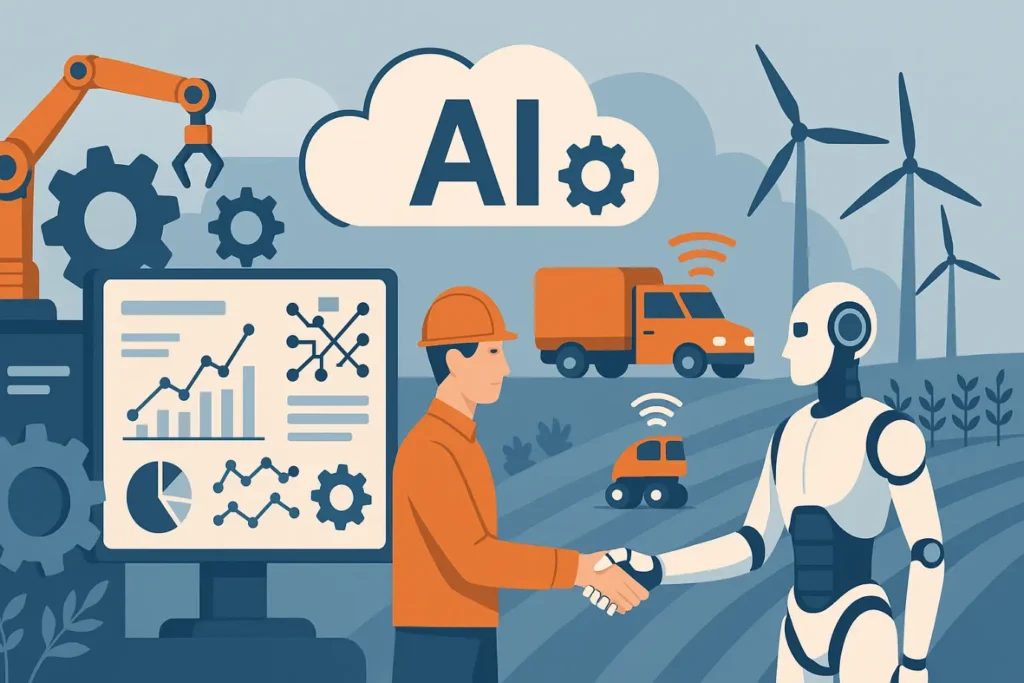
Looking ahead, the trajectory of machine automation points towards even greater integration, intelligence, and pervasiveness. Expect to see:
- More pervasive AI: Machines will become even better at understanding context, anticipating needs, and performing complex, nuanced tasks.
- Self-optimizing systems: Factories and supply chains will increasingly manage and optimize themselves with minimal human intervention.
- Human-Robot Collaboration: Cobots will become even more common, seamlessly integrating into diverse workplaces, from manufacturing to healthcare.
- Automation in new frontiers: Beyond traditional industries, automation will expand further into agriculture, logistics, personal services, and even space exploration.
Conclusion
The evolution of machine automation from software-defined systems to AI-driven intelligence represents a transformative opportunity for organizations across industries. By overcoming the limitations of traditional automation and embracing the adaptability, efficiency, and intelligence of AI, businesses can stay ahead of the curve and achieve new heights of operational excellence. As the field continues to advance, those who invest in intelligent automation today will be best positioned to thrive in the future.