

Table of Contents
Introduction
In the arena of manufacturing, ethics has a major place. Nonetheless, at the heart of all successful manufacturing lies mechanical drafting, the detailed and fundamental process of translating concepts into a technical drawing for the production process to begin. The problem here is that traditional mechanical drafting methods are very expensive to initiate, hugely inefficient, and are often the cause of mistakes in the limber world of manufacturing. By most of the standards, manufacturers have to sharpen their manufacturing and then stay ahead.
Did You Know?
The transition from manual drafting to CAD software has been shown to reduce design errors by up to 90% and decrease project turnaround times by as much as 75%. This dramatic improvement in accuracy and efficiency underscores the transformative power of modern drafting solutions in manufacturing.
Fortunately, the postulation of cost-effective mechanical drafting solutions offers a variety of conveniences, and a variety of presses can penetrate these solutions. With the new tools, technology, and services a contemporary tool can provide, manufacturers can dynamically emphasize the production of high products without making a dent in their pocket. In this blog, the role that mechanical drafting plays in manufacturing, the challenges that are encountered in traditional methods, and how cost-effective solutions are molding the curve will be highlighted.
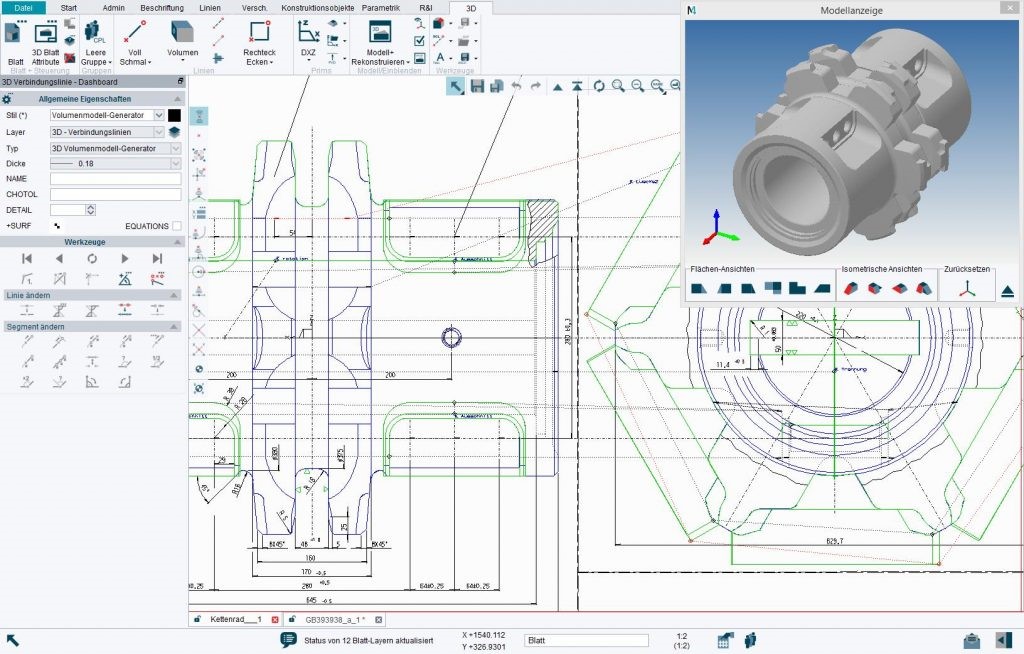
Mechanical Drafting Workspace
Source: https://upload.wikimedia.org/wikipedia/commons/2/24/M4_DRAFTING_7.png
Understanding Mechanical Drafting in Manufacturing
Mechanical drafting means creating detailed, technical drawings that are the blueprints for manufacturing components, machines, and systems. These drawings are important for ensuring precision, functionality, and consistency in the production process.
Mechanical drafting outputs typically include:
- Assembly Drawings: Illustrate how different parts fit together in a system.
- Fabrication Drawings: Provide detailed instructions for creating individual components.
- Part Drawings: Specify dimensions, materials, and finishes for individual parts.
The importance of accurate and precise mechanical drafting cannot be exaggerated because poorly drafted designs can create manufacturing errors, wasted resources, and product recalls, all of which can be costly for businesses.
Challenges in Traditional Mechanical Drafting
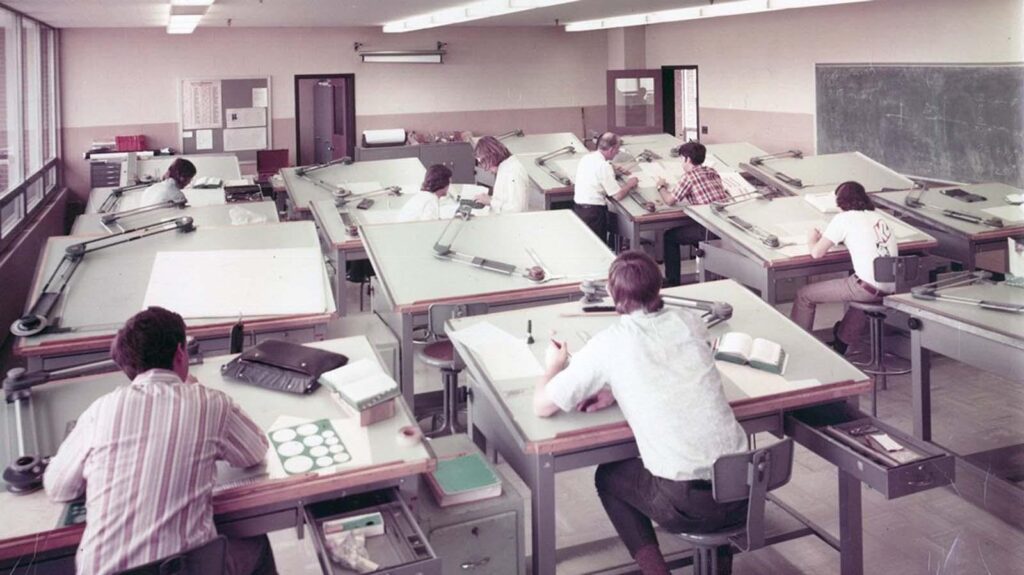
Life Before Autocad
Despite its critical role, traditional mechanical drafting presents several challenges:
- High Costs: Manual drafting requires skilled labor, which can be expensive, especially for complex projects.
- Error-Prone: Relying on manual methods increases the likelihood of errors, which can lead to costly revisions.
- Slow Turnaround Times: Drafting large-scale projects manually takes significant time, delaying production timelines.
- Limited Collaboration: Traditional methods often lack collaborative tools, leading to communication gaps between teams.
These challenges have driven the need for modern, cost-effective drafting solutions that improve efficiency and reduce costs.
Cost-Effective Solutions in Mechanical Drafting
Adoption of CAD Software
Just like drafting, Mechanical Engineering works differently with the beginning of Computer-Aided Design (CAD) software, which helps automate labor-intensive processes. CAD and similar software like AutoCAD, SolidWorks, and Creo allow designers to:
- Create highly accurate 2D and 3D models.
- Save repetitive tasks with pre-drawn templates.
- Make real-time changes with parametric design capabilities.
Going from manual drafting to CAD would help manufacturers greatly improve productivity while significantly reducing errors.
Outsourcing Drafting Services
Outsourcing has been a great way to gain cost advantages to mechanical drafting. Teaming with specialized providers like Tesla Mechanical Designs can further improve the benefits:
- Cost Reduction: Outsourcing eliminates the need for in-house drafting teams and costly software licenses.
- Expertise: Access to experienced drafters and engineers who deliver high-quality outputs.
- Scalability: Outsourcing partners can handle projects of any size, allowing businesses to scale their drafting needs as required.
Cloud-Based Collaboration
Cloud-based platforms actually helps in real-time collaboration between design teams, clients, and stakeholders. Tools like Vault, PDM, etc. let us centralize data sharing, reducing errors caused by miscommunication. By streamlining collaboration, cloud platforms help accelerate project timelines and improve accuracy.
Integration of 3D Drafting and Modeling
2D drafting is very much important likewise 3D modelling has set the standards for mechanical drafting. With 3D models, manufacturers can:
- Visualize components and assemblies in detail.
- Identify potential design flaws before production begins.
- Conduct virtual simulations to test functionality and fit.
Automation and AI in Drafting
Automation tools and AI-powered solutions has changed the whole drafting process. From automating dimensioning to detecting errors in designs, AI has improved both speed and accuracy. For example, parametric modelling helps designers to make global changes to designs with minimal effort, saving time during revisions.
Industry Applications of Mechanical Drafting
Automotive Manufacturing
Mechanical drafting designs components like engines, transmissions, and other mechanical systems. And for that, CAD tools help in precise and accurate modelling and testing, providing safety and performance.
Aerospace and Defense
Mechanical drafting also helps the aerospace industry in the development of high-performance details of elements such as turbine blades and fuselage structures.
Consumer Goods
Mechanical drafting guarantees that products from household appliances to electronics, are functional, durable, and aesthetically pleasing.
Heavy Machinery
Drafting solutions are very much important for designing equipment like cranes, conveyor belts, and hydraulic systems.
Best Practices for Implementing Cost-Effective Drafting Solutions
- Choose the Right Tools: Select CAD software that aligns with your specific manufacturing needs.
- Partner with Experts: Collaborate with experienced outsourcing providers like Tesla Mechanical Designs for reliable results.
- Invest in Training: Ensure your team is trained to use modern drafting tools effectively.
- Optimize Workflows: Regularly review and improve drafting processes to maximize efficiency.
- Leverage Cloud Platforms: Use cloud-based tools for real-time collaboration and data management.
The Role of Tesla Mechanical Designs in Mechanical Drafting
CAD Services is not just a leading provider of mechanical drafting services, but also offers the best solutions to meet the needs of manufacturers. Their team of skilled drafters and engineers specializes in:
- 2D and 3D mechanical drafting.
- Assembly and fabrication drawings.
- Conversion of legacy drawings to CAD.
With a focus on quality, affordability, and efficiency, Tesla Mechanical Designs has earned a reputation as a trusted partner for businesses across industries.
Related Blog
What Role Does the Mechanical Drafting Services Play in the Mechanical Industry?
Future Trends in Mechanical Drafting
Rising trends such as sustainability, digital twins, smart manufacturing, VR/AR, and AI are changing the future of mechanical drafting, promoting innovation and efficiency.

Future of Mechanical Drafting
Sustainability Integration
Mechanical drafting solutions will continue to emphasize sustainable approaches, including reducing material waste and using environmentally friendly materials.
Digital Twins
Digital twin usage will allow for monitoring and optimizing manufacturing in real-time to increase efficiency.
Smart Manufacturing
Drafting will be a major contributor to developing intelligent components with IoT technologies.
Virtual Reality (VR) and Augmented Reality (AR)
VR and AR software will improve visualization so that clients can engage with 3D models in virtual environments.
AI and Automation
AI-based software will continue to automate drafting procedures, providing smart design suggestions and repetitive work automation.
Conclusion
Mechanical drawing is the foundation of the manufacturing industry to have precision, quality, and effectiveness in production. The manufacturer can overcome chronic challenges by adopting affordable means like CAD tools and outsourcing and staying competitive in a dynamic market. Tesla Mechanical Designs stands to be a step ahead in this transformation, with services provided dependent upon your drafting requirements and most affordably and honestly.