



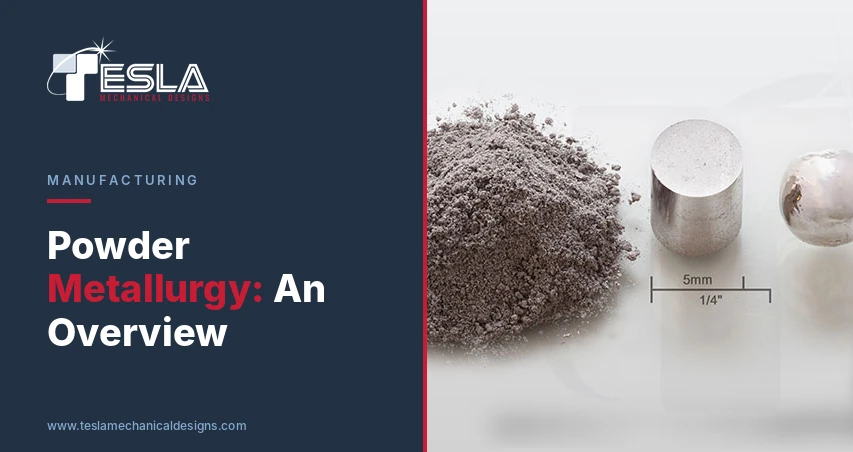
Powder Metallurgy can be defined as the technology concerned with the working on metals in its powdered form and processing it into solid shapes and components, by the application of extremely high pressure & temperature. When compared to the traditional methods of manufacturing for high precision, the application of Powder Metallurgy proves to be more flexible and rewarding. The use of metal in its atomized form not only renders to an impeccable level of quality of the components been produced but also results to a more uniform and even microstructure resulting to elevated internal strength and quality. The products been produced have a high quality lattice & surface finish with a comparatively negligible chance of internal stresses and defects, and thus reduces the cost on reworking and finishing drastically. The process also allows the manufacturer with the flexibility of determining the concentrations of the materials to be used along with the privilege to choose from a wider range of shapes, sizes and materials regardless of the intricacies and complexities associated traditionally.
POWDER CHARACTERISTICS, MANUFACTURING AND ITS INFLUENCE ON THE FINAL PRODUCT:
The efficiency of the resulting quality from any PM technique is directly proportional to the characterization and control of the particles been used. The pulverization technique directly influences the chemistry and structure of the granules along with the precision of particle size distribution in the product. This coupled with the presence of impurities and additives influences the behavior of the powder in the successive procedures involving compaction and sintering processes, meddling with the configuration, lattice and the deriving properties of the final product.
Manufacturing Processes:
The significant metal powder production processes followed by manufacturing processes include:
Physical Methods:
- Atomization- The procedure involves pressuring a liquid through an orifice at a liquid stream where the metal molten is separated into tiny droplets and frozen instantly before they come in contact with one another or any other solid surface.
- Electrolyte Method- During the electrodeposition, the adjustments of physical and chemical properties leads to deposition of metal in the form of flake, later crushed into powder.
Chemical Methods:
- Chemical reduction- The process used for transfiguring metal-oxides into metals where the process opted depends upon the reactivity of the metal.
- Chemical decomposition- The breakdown of a normal molecule into two or more particles, i.e. two or more products are formed by one single reactant.
Blending of powders:
This is the process where the base metal, alloys, any other element and powdered lubricant are fed into a closed mixing vessel and are mixed well or blended well into a homogeneous mix. The mixing and blending of powder feed stocks is carried out for two reasons:
1. To introduce alloying element additions in a homogeneous form
2. To incorporate a pressing Lubricant to reduce friction during the process of compaction.
Compacting:
The process of compacting metal powder in a die through the application of high pressures can be described as compaction. Stereotypically, these tools are apprehended in the vertical orientation with the punch tool forming the bottom of the cavity. A measured amount of the mixed powder is hosted into a precision die and then it is pressed at room temperature and pressure. By doing this, the loose metal powder is integrated and densified into a shaped model. The density of the pressed powder escalates with the amount of pressure applied.
Sintering:
Sintering is the thermal treatment of a powder, at a temperature below the melting point of the main constituent, for increasing its strength by the metallurgical bonding of its particles.
After compaction, powdered materials are warmed in a controlled climate in a procedure known as sintering. During this procedure, the surfaces of the particles are reinforced and attractive properties are achieved.
Sintering of powder metals is a procedure where particles under tension artificially attach to themselves so as to frame an intelligible shape when presented to a high temperature. The temperature where the particles are sintered is most generally beneath the dissolving purpose of the fundamental segment in the powder. If the temperature is over the softening purpose of a segment in the powder metal part, the fluid of the liquefied particles fills the pores. This kind of sintering is known as fluid state sintering. A significant test with sintering when all is said in done is knowing the impact of the procedure on the elements of the minimal particles. This is particularly hard for tooling purposes in which explicit measurements might be required. It is generally basic for the sintered part to shrivel and get denser, yet it can likewise extend or encounter no net change.
The fundamental main impetus for strong state sintering is an overabundance of surface free vitality. The procedure of strong state sintering is perplexing and subject to the material and heater (temperature and gas) conditions. There are six principle organizes that sintering procedures can be gathered in which may cover with each other: 1) starting holding among particles, 2) neck development, 3) pore channel conclusion, 4) pore adjusting, 5) densification or pore shrinkage, and 6) pore coarsening. The primary instruments present in these stages are dissipation, buildup, grain limits, volume dispersion, and plastic deformation.
Advantages of Powder Metallurgy over Conventional Methods:
Creation of parts by means of powder metallurgy has numerous potential points of interest when contrasted with delivering them through traditional strategies, for example, machining from billets.
A portion of these preferences include:
- Colossal potential investment funds underway by utilizing powder metallurgy which is outfitted towards large scale manufacturing.
- Powder metallurgy is a close to nett shape framing process, implying that as a rule no completing tasks are compensated. Further the dimensional precision conceivable is very high.
- Parts have sound and vibration damping properties.
- Parts have great compound homogeneity.
- The time taken to take a section from idea to creation utilizing powder metallurgy is regularly very short which has financial advantages.
Casting design services are about the creation of customized prototypes which adds value to your engineering requirements, we at Tesla Mechanical Design offer Cast, Mold Design and Die Cast Designing Services which can help you with projects related to powder metallurgy.