



Powder Metallurgy

Engineering workspace
Engineering built around manufacturing.

The powder metallurgy process enables manufacturers to make products with more consistent, predictable behaviour by producing parts with a homogeneous structure across a wide range of applications. Tesla Mechanical Designs offers various services, including Mould Design, Pattern Design, and Casting Design Services, to implement PM. These processes have a high degree of flexibility, allowing the tailoring of the physical characteristics of a product to suit your specific requirements, including structural pieces with complex shapes, controlled porosity and controlled performance.
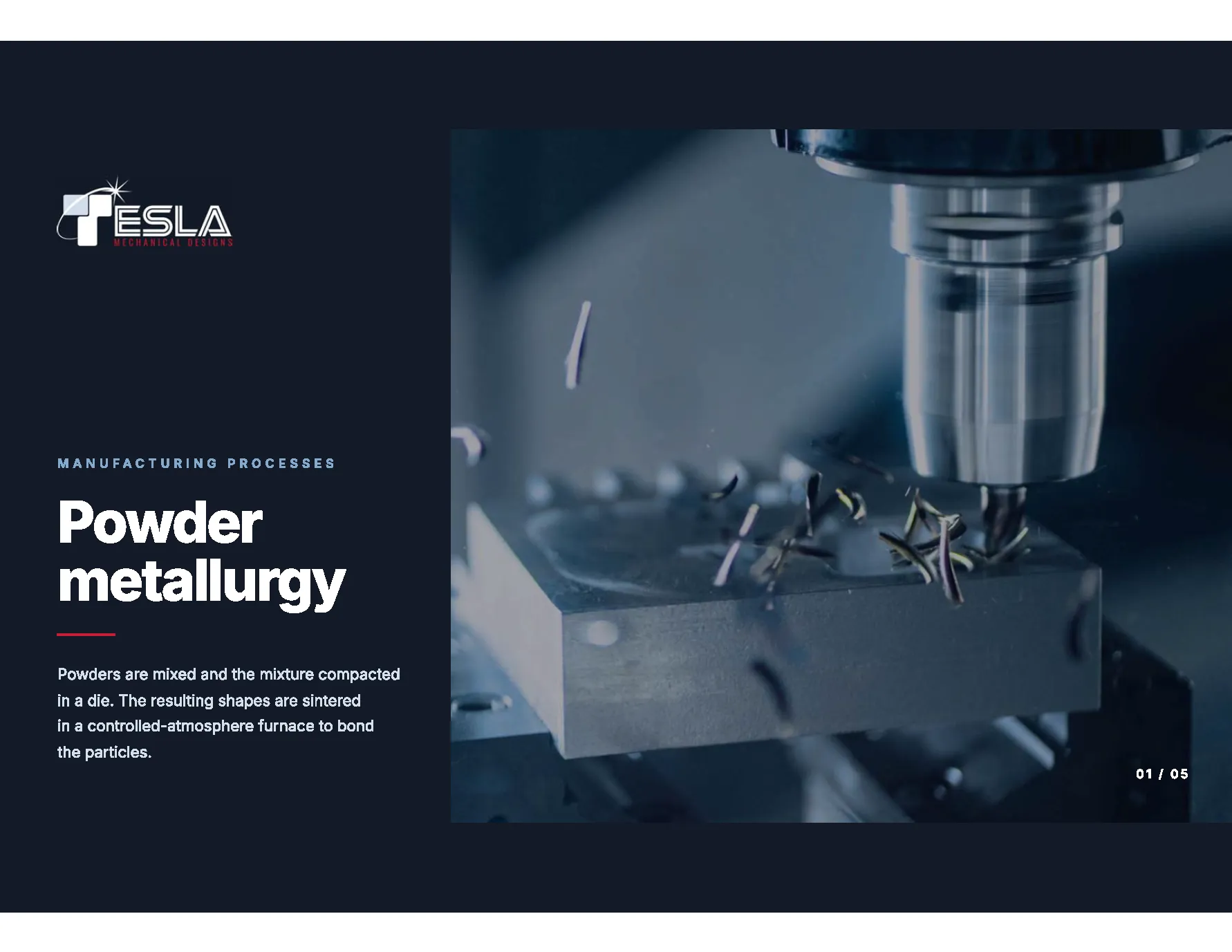
Introduction to powder metallurgy manufacturing processes detailing powder mixing, die compaction, and controlled-atmosphere sintering for particle bonding.
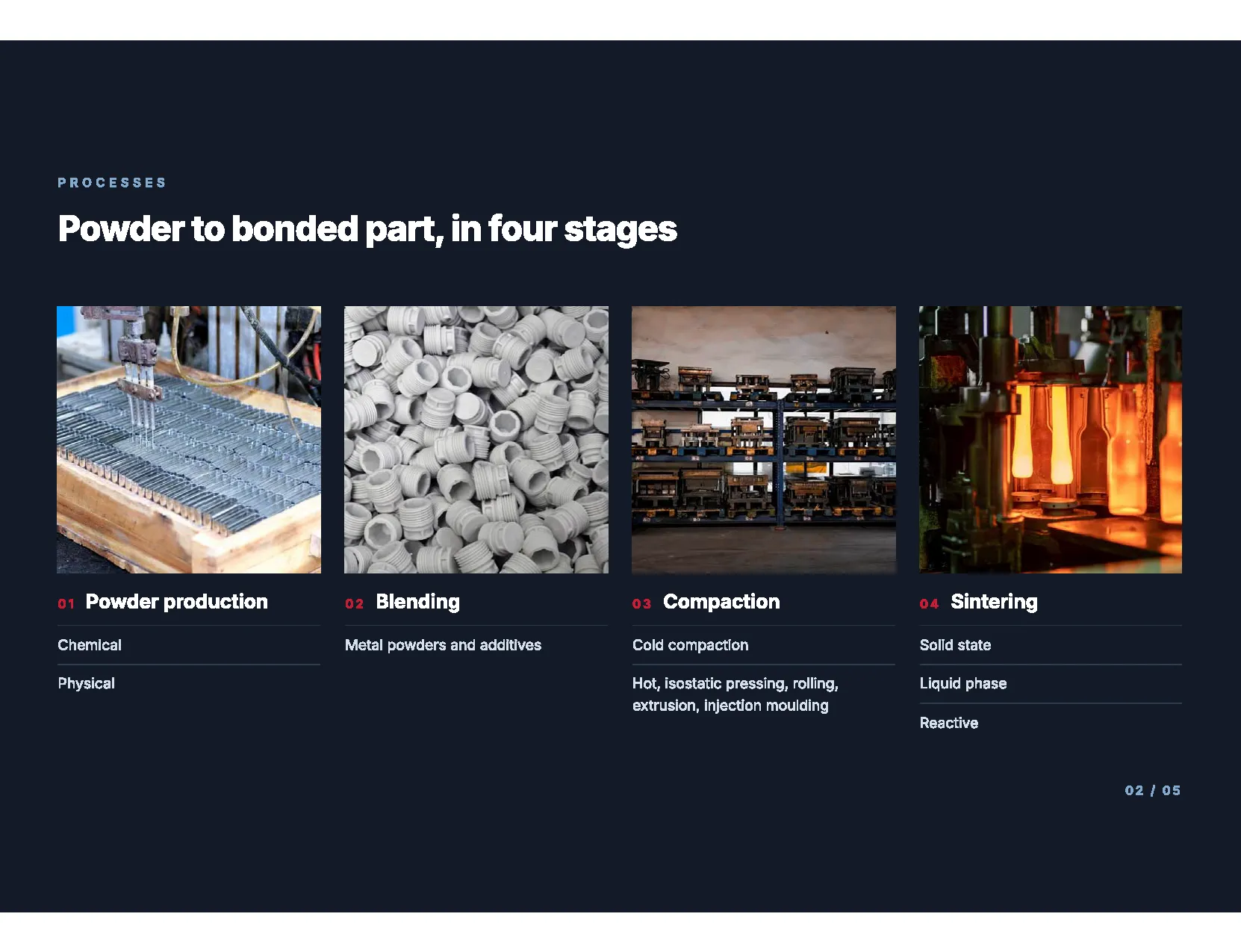
The four core stages of powder metallurgy including chemical powder production, metal blending, isostatic compaction, and solid state sintering.
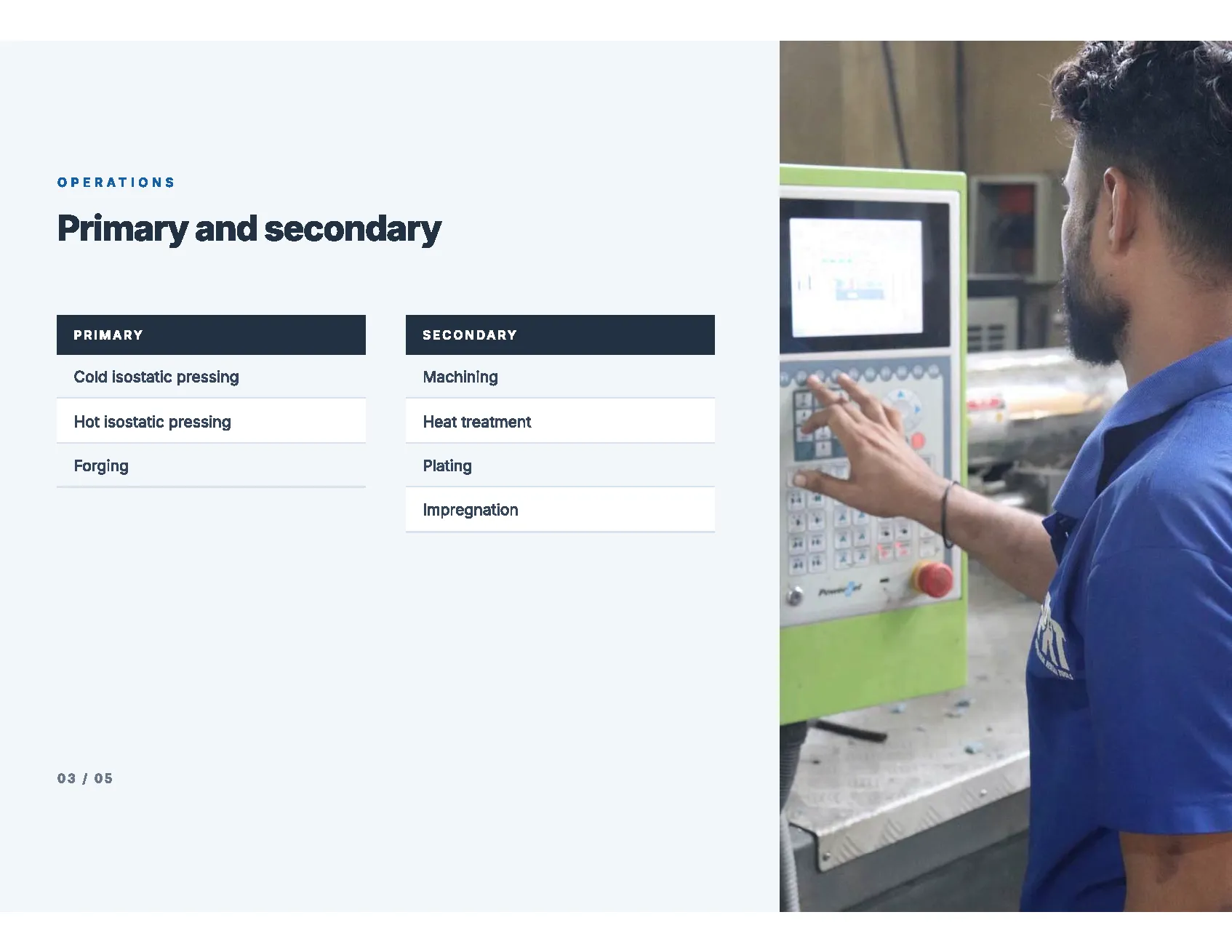
Breakdown of powder metallurgy operations comparing primary isostatic pressing and forging with secondary machining, heat treatment, plating, and impregnation.
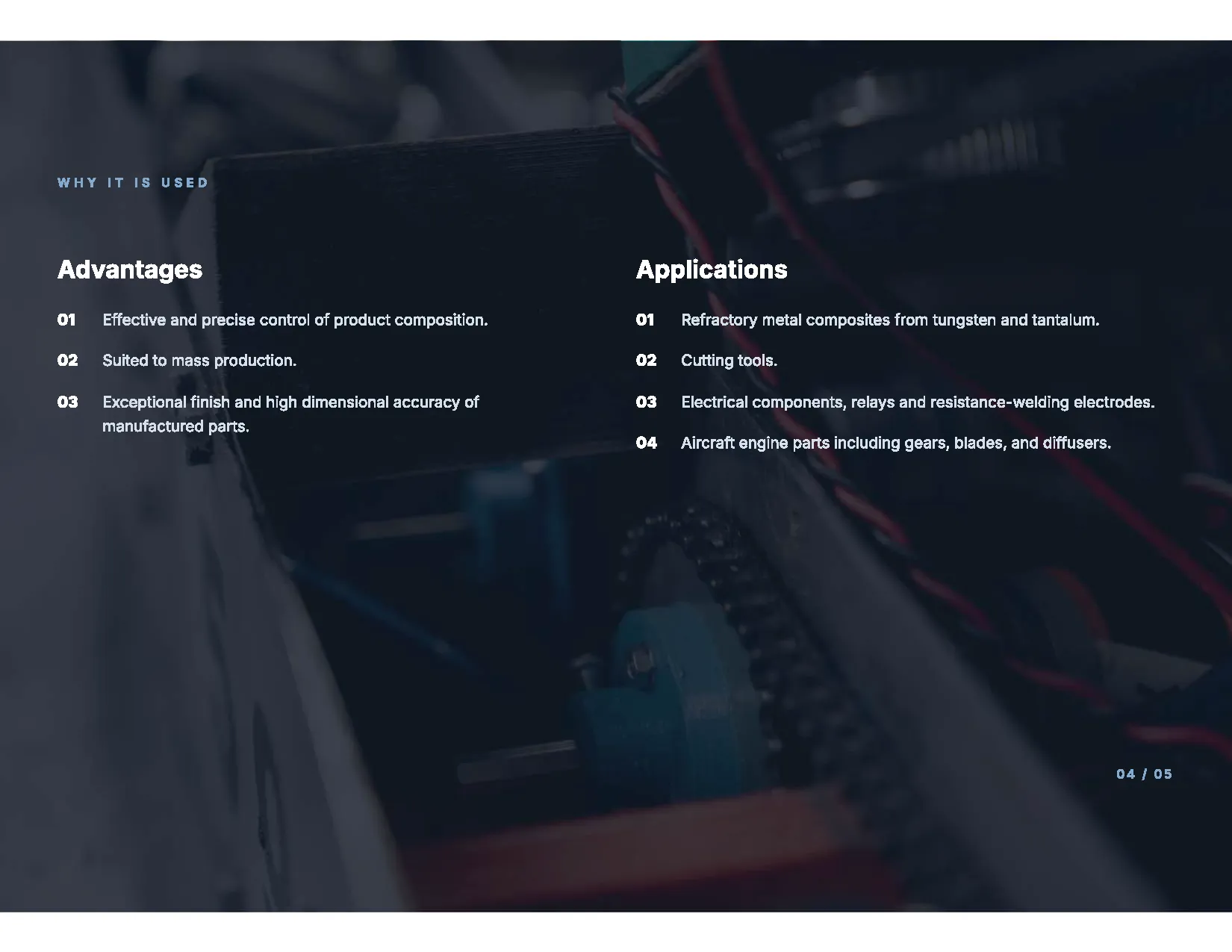
Key advantages of powder metallurgy for mass production and high dimensional accuracy, alongside industrial applications like cutting tools, electrical components, and aircraft engine parts.
Engineering guideline emphasizing the importance of specifying and designing mechanical components specifically for the powder metallurgy process early in the manufacturing cycle.