


Finite Element Analysis

Engineering built around manufacturing.
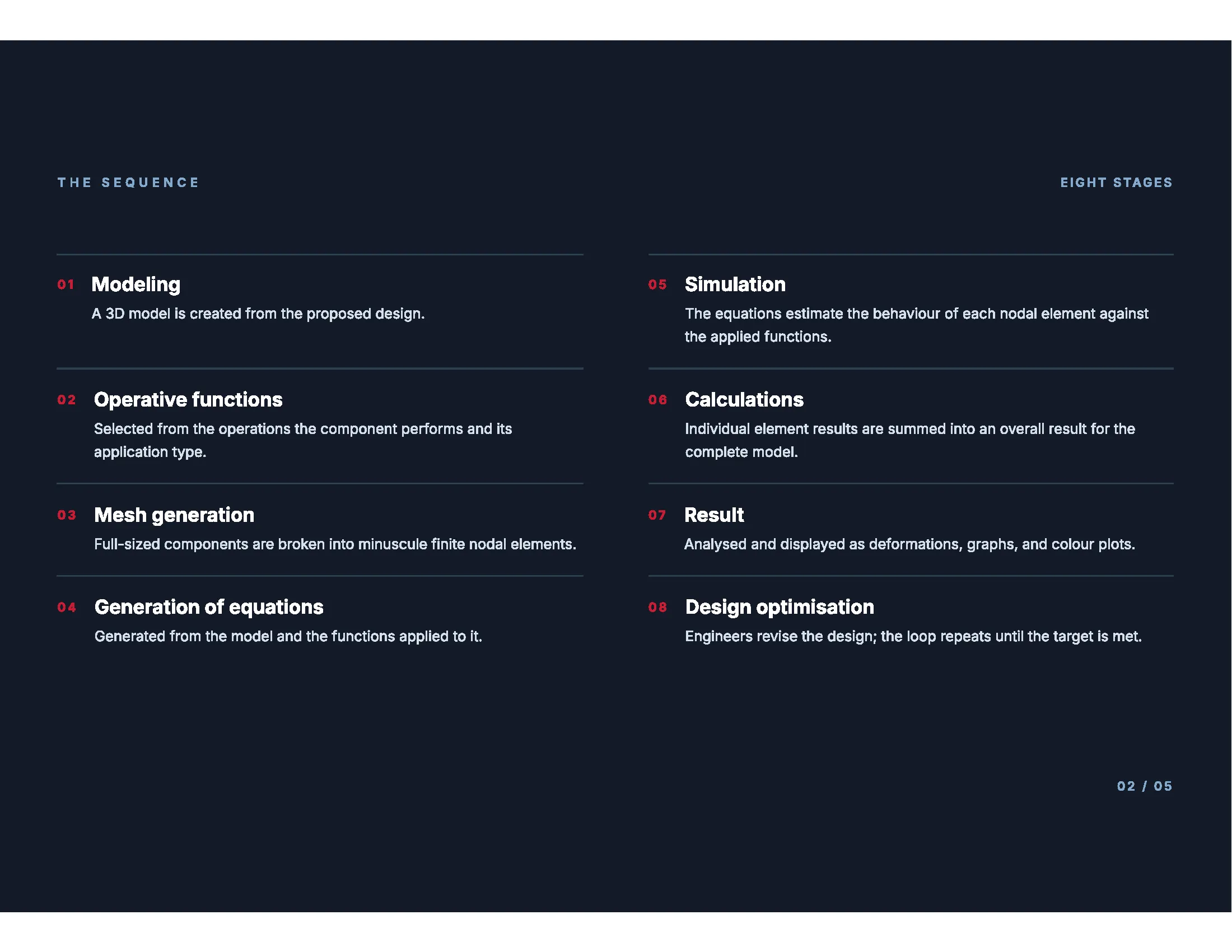
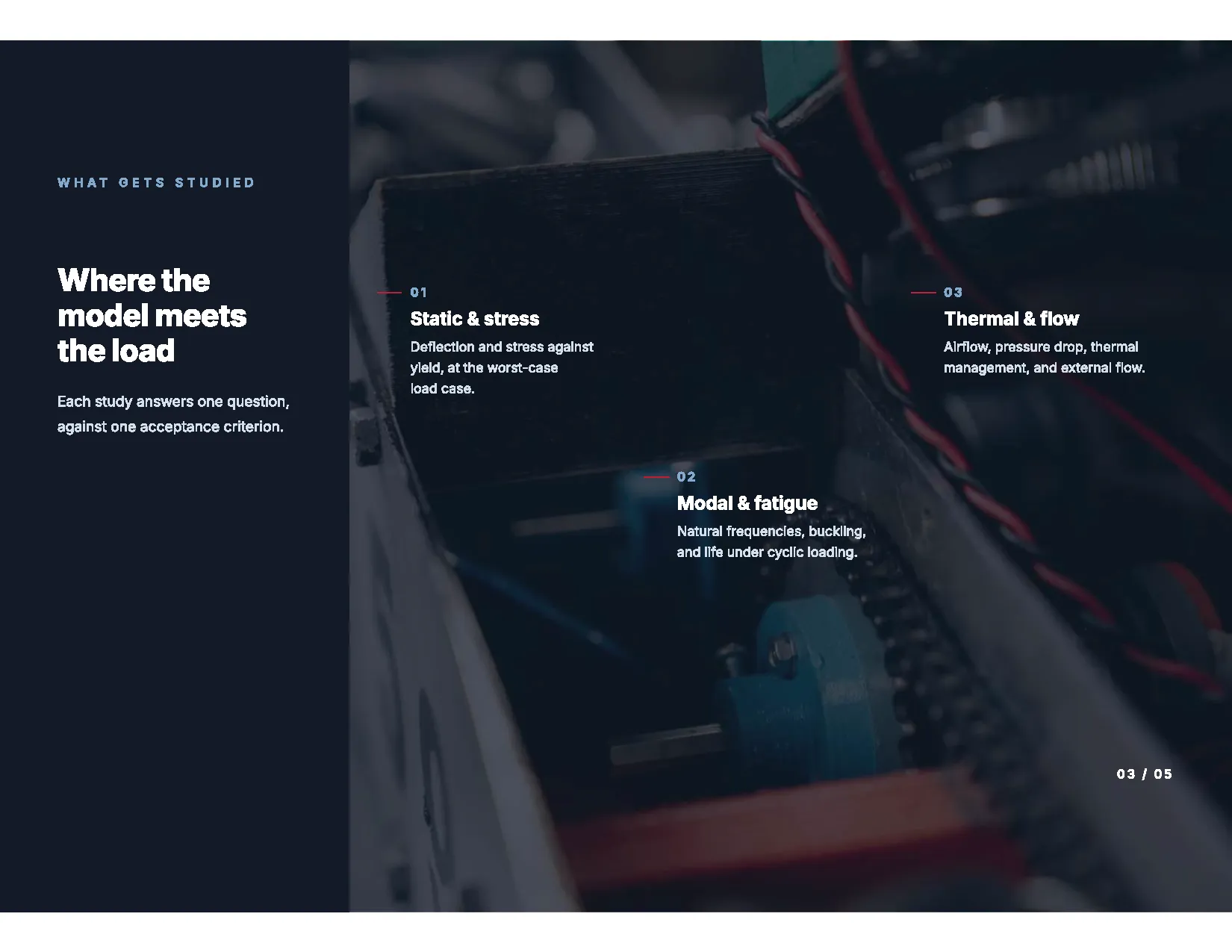
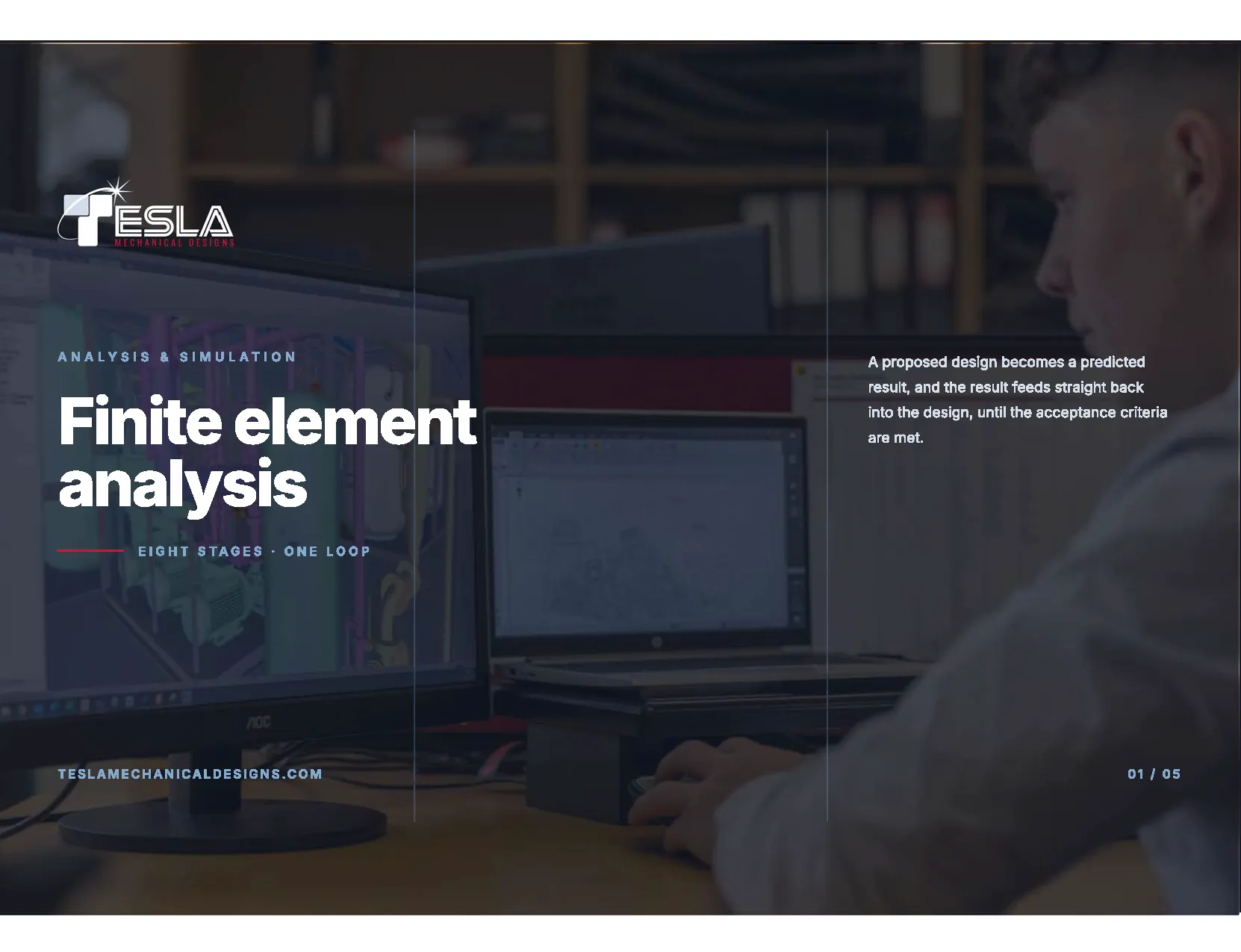
Finite element analysis, or FEA, is a practice most widely implemented for calculating & predicting the effects of environmental, applied & induced factors, such as external loads, temperature gradients & heat flux and induced vibration, on designed components on a real-time scale.
It aims to optimise the design of the model by calculating and thus predicting the intrinsic and extrinsic effects of these factors on the components for a long or shorter term of application & use. Here you can find detailed information on each step involved in Finite Element Analysis, along with its various applications and also its benefits of implementing the same.
Stay in touch with us for such informative content. Above all of this, we provide services in a similar field for similar work. Explore our value-driven services at Tesla Mechanical Designs